
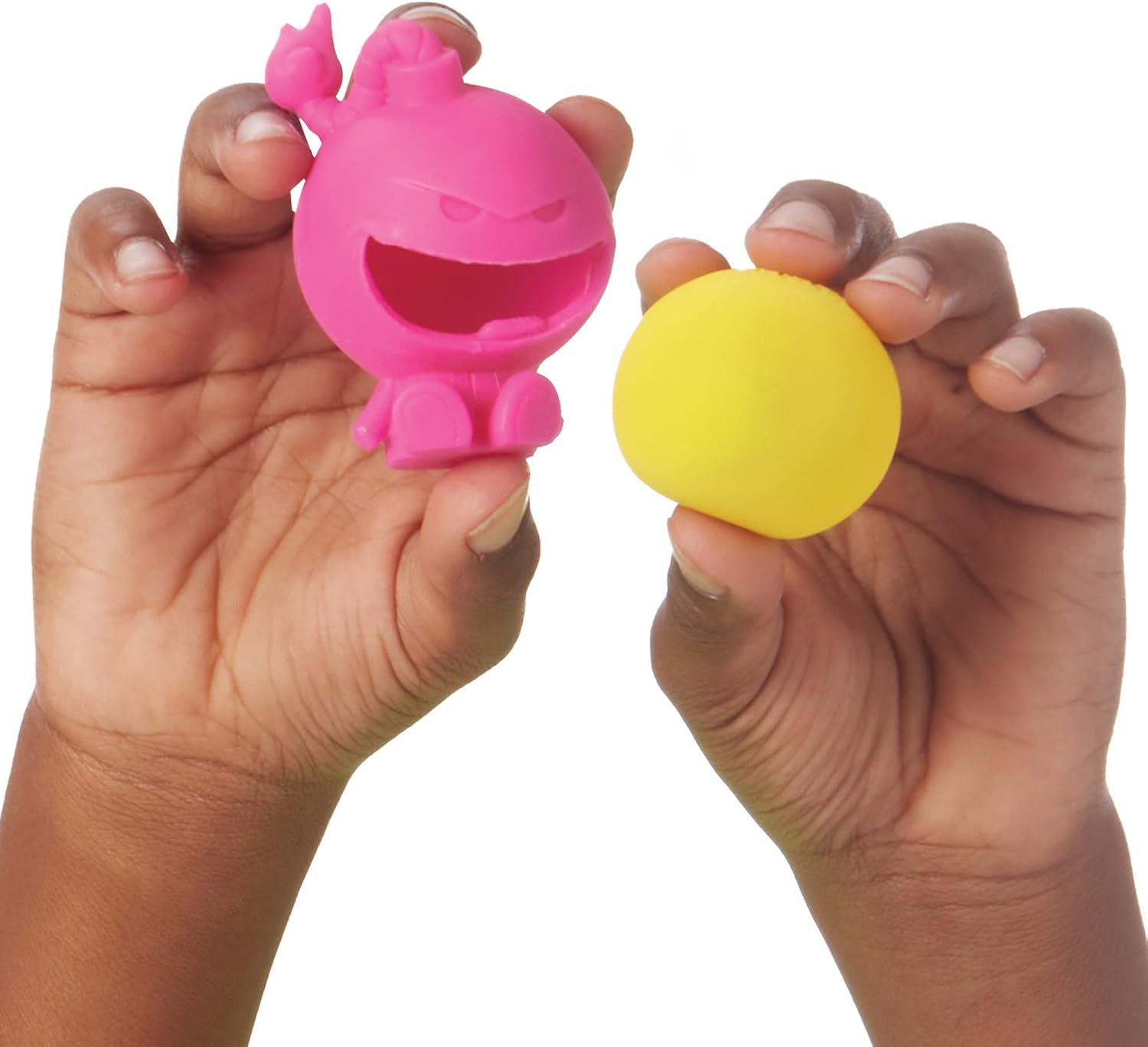
Have you ever noticed how instinctively you reach for something to squeeze when you feel stressed, nervous, or restless? Whether it’s kneading dough, gripping a stress ball, or slowly pressing into a soft squishy toy, the action feels almost automatic – and deeply satisfying.
But why does squeezing feel so good?
The answer lies in the powerful connection between your sensory system, muscles, and brain. Repetitive squeezing isn’t just a habit; it’s a neurologically meaningful activity that can promote relaxation, regulate emotions, and calm the nervous system. Let’s explore the science behind this simple yet effective action.
The Role of Touch in the Nervous System
Touch is one of the first senses to develop in humans. Even before birth, the tactile system begins forming connections in the brain. Throughout life, touch remains one of the most direct pathways to emotional regulation.
When you squeeze a soft object, you activate mechanoreceptors in the skin and deeper tissues of the hands. These specialized sensory receptors detect:
- Pressure
- Texture
- Vibration
- Stretch
- Movement
Once activated, they send signals through the spinal cord to the brain’s somatosensory cortex – the area responsible for processing touch.
Because the hands contain a dense concentration of sensory receptors, even small amounts of pressure create strong neural feedback. This feedback helps anchor attention to the present moment, reducing mental noise.
Repetition and the Brain’s Preference for Rhythm
The brain loves patterns and predictability. Repetitive squeezing creates a rhythmic, controlled motion that the brain can easily anticipate.
This predictability matters because stress often arises from uncertainty. When you engage in steady, repetitive squeezing:
- The brain detects consistent sensory input
- Neural pathways become temporarily focused on that pattern
- Cognitive load shifts away from stressful thoughts
In simple terms, squeezing gives your brain something structured and soothing to process.
Repetition can also help regulate the autonomic nervous system – the system that controls involuntary processes like heart rate and breathing.
Activating the Parasympathetic Response
The autonomic nervous system has two main branches:
- The sympathetic system (fight-or-flight)
- The parasympathetic system (rest-and-digest)
When you’re stressed, the sympathetic system dominates. Heart rate increases, muscles tighten, and cortisol levels rise.
Gentle, rhythmic squeezing – especially when paired with slow breathing – can encourage parasympathetic activation. This shift may lead to:
- Lower heart rate
- Reduced muscle tension
- Slower breathing
- A feeling of calm
While squeezing alone isn’t a medical treatment, it can serve as a supportive tool to help interrupt the stress response cycle.
Muscle Engagement and Tension Release
Stress is not just mental – it’s physical. When anxious, people often clench their fists, tighten their shoulders, or grip objects unconsciously.
Intentional squeezing provides:
- Controlled muscle contraction
- Followed by deliberate release
This engage-and-release cycle mimics techniques used in progressive muscle relaxation. By actively squeezing and then letting go, you:
- Increase awareness of tension.
- Create contrast between tightness and relaxation.
- Signal safety to the body.
That contrast enhances the sensation of relief.
The Dopamine and Reward Connection
Satisfying sensory experiences can activate the brain’s reward system.
When you squeeze something with a soft, dough-like resistance that slowly returns to shape, your brain registers it as:
- Pleasing
- Predictable
- Controllable
This can stimulate small releases of dopamine – a neurotransmitter associated with reward and motivation.
The tactile feedback loop works like this:
- You squeeze.
- You feel resistance.
- The object responds.
- Your brain registers completion.
That closed-loop sensory experience feels satisfying because it’s immediate and responsive.
Grounding Through Sensory Anchoring
One reason squeezing feels calming is that it brings attention into the body. Stress often involves racing thoughts about the future or replaying past events.
Touch-based activities act as grounding tools by:
- Focusing awareness on physical sensation
- Redirecting attention from mental rumination
- Encouraging present-moment awareness
This is why many mindfulness exercises involve physical anchors – holding an object, noticing textures, or pressing feet into the floor.
The hands are especially powerful grounding points because of their rich sensory input.
Fidgeting and Cognitive Regulation
Interestingly, small repetitive movements – often called fidgeting – can support cognitive performance.
Research suggests that light, non-disruptive movement may:
- Increase alertness
- Improve sustained attention
- Prevent mental fatigue
For some individuals, especially those prone to restlessness, squeezing provides just enough stimulation to keep the brain engaged without becoming overwhelming.
It’s not about distraction- it’s about regulation.
Why Soft Resistance Matters
Not all tactile experiences are equally soothing. The specific combination of:
- Soft texture
- Gentle resistance
- Slow rebound
creates a unique sensory profile.
Too firm, and the object may increase tension.
Too soft, and it may lack satisfying feedback.
A balanced resistance allows for:
- Muscle engagement
- Sensory feedback
- Visual confirmation of change
This balance enhances the calming effect.
Emotional Association and Learned Comfort
Beyond pure biology, squeezing can also become emotionally conditioned.
If someone repeatedly uses a squishy object during stressful moments and feels relief afterward, the brain forms an association:
Squeeze → Calm → Relief
Over time, simply holding the object can trigger anticipatory relaxation. This is similar to how certain songs, scents, or routines can immediately shift your mood.
Simplicity and Control
One often overlooked factor is control. Stress frequently arises from feeling overwhelmed or powerless.
Squeezing is:
- Simple
- Immediate
- Fully controllable
You decide the pressure, speed, and rhythm. That sense of control – even over something small – can restore a feeling of stability during chaotic moments.
The simple act of squeezing engages complex biological systems: tactile receptors, neural pathways, muscle fibers, and emotional circuits. Through repetition, rhythm, and controlled resistance, it can help regulate the nervous system and promote relaxation.
What feels like a small, playful action is actually a multi-layered sensory experience – one that connects body and brain in a deeply grounding way.
In a fast-moving world filled with constant mental stimulation, sometimes relief comes not from doing more, but from focusing on something simple, tangible, and wonderfully squeezable.